
Paṅcākṣari means five syllables and refers to
| 1 | 2 | 3 | 4 | 5 |
| न | मः | शि | वा | य |
| na | maḥ | śi | vā | ya |
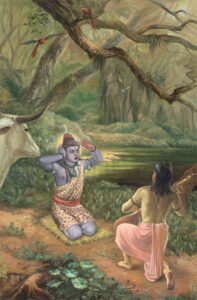 The term Śiva means auspicious. Śiva makes everything auspicious, always. The mantra namaḥ śivāya offers salutations to Śiva and is the most effective mantra to propitiate Shiva. This mantra occurs in many places in Vedic and Puranic literature.
The dāridrya dahana stotra of Vasiṣṭha sings ~
dāridrya duḥkha dahanāya namaḥ śivāya
Literally meaning ‘salutations to Śiva who burns away the sins causing poverty and sorrow’. With the regular recitation of the pañcākṣarī ‘namaḥ śivāya’ one overcomes all sorrow and every kind of poverty, including spiritual poverty that ravages the soul.
It is the mūla mantra of Śiva and is at the very root of Hinduism. Let us look into each of the five syllables as taught by Adi Śaṅkara in the Pañcākṣarī Stotra
Pañcākṣarī Stotra
नित्याय शुद्धाय दिगम्बराय तस्मै नकाराय नमः शिवाय॥ १॥
nāgendrahārāya trilocanāya bhasmāṅgarāgāya maheśvarāya |
nityāya śuddhāya digambarāya tasmai nakārāya namaḥ śivāya || 1||
Translation: Obeisances to Śiva who wears the nāga-king (Vasuki) as garland, is three-eyed, smeared with bhasma (yajña ash), is Maheśvara (great lord of all souls). He is eternal and unchanging, always pure, sky-clad or direction-clad and represented by न (na) in the mantra namaḥ śivāya
Vāsuki represents the protection potential against all negative karma and all poison generating from the churning of the oceans of karma. Symbol of absolute faith, dedication and sacrifice.
Three eyes are the Sun, Moon and Lagna representing the three charts ruling the destny and life of all creatures.
Bhasma ash smeared on the body represents absolute detachment, vairagya and giving of mokṣa to the souls whose ashes are smeared on Him.
Maheśvara is the form in which Lord Viṣṇu worships Him. Maharṣi Jaimini teaches the calculation of the planet as Maheśvara in a horoscope. Unless otherwise overcome by conditions, normally this is the lord of the 8th bhāva from kāraka lagna. Worship of this form of Śiva grants mokṣa from the bondages of earthly lives. For example, Śrī Rama worshipped Śiva as Rāmeśvara and was freed from the karmic shackles caused by the curse of Narada as monkey army sped to Lanka for Sita emancipation.
Nitya means eternal, unchanging and refers to the naisargika kāraka in jyotiṣa. Śiva is the pratyādhi devatā of the Sun and the lord of all souls since Sun represents all souls ~ ‘sarvātma ca divākara’
Śuddha means purity or pure inevery sense of the word, and not just external purity. He is so pure that He alone can exist in places like the graveyard and burning ghats of dead bodies and still not be sullied by the impurities there. All devatā leave the house when a human being dies, but Śiva is there even at the graveyard and never really leaves us. Such is His purity that all who come in contact are automatically purified.
Digaṁbara refers to one who wears no clothes. Wearing white garments is called svetāṁbara instead. Diga refers to the directions and these are not just physical but also symbolize the directions of karma. He wears our karma directions, thereby clothing our intellect with His knowledge so that we may succeed in our endeavors.
All this is one of the five tattva, one of the five heads of Lord Śiva.
मन्दारपुष्प-बहुपुष्प-सुपूजिताय तस्मै मकाराय नमः शिवाय॥ २॥
mandākini-salilacandana-carcitāya nandīśvara-pramathanātha- maheśvarāya |
mandārapuṣpa-bahupuṣpa-supūjitāya tasmai makārāya namaḥ śivāya || 2||
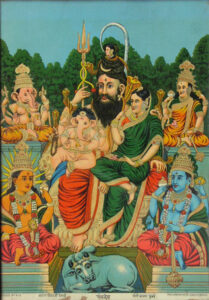
Translation: Obeisances to Śiva (namaḥ śivāya), who is worshipped with holy waters of Gaṅgā (mandākini), thereafter annointed with sandal paste. He is the Lord of Nandi (ṛk veda), as well as host of goblins and ghosts as Maheśvara. Worshipped properly with hibiscus (mandāra) and various other flowers, He is the syllable म (ma) in namaḥ śivāya
The process of bathing Śiva Liṅga with water from a river is called abhiṣeka and is carried out diligently before and after all other offerings. Thereafter Śiva wears different looks on different days personifying the time or the day devatā. The one thing common is the first offering of sandal-paste. This offering is always done to Śiva first as He is the guru of Jagannath. Only after that is it always offered to the highest knolwedge brāhmaṇa who is the living representative of Śiva due to the knowledge he carries.
As the lord of Nandi, the bull of dharma (9th bhāva), Śiva is the knowledge contained in the hymns of the Ṛk Veda as well as all other veda and upveda, as well as all puranic and vedic literature. Worshipping Him as Nandiśvara grants this knowledge. He is Maheśvara for all souls as taught by Jagannath-Viṣṇu and is always with the ātman in the form of knowledge.
The flower mandāra (hibiscus) but the word मन्दर mandara
- m1. slow, tardy, sluggish ( from manda meaning Śani) also literally large, thick, firm (from bahala)
- m2. a pearl chain consisting of 8 or 16 strings to represent asta kaala or saodasa yamardha
- m3. of a sacred mountain, the residence of various deities. it served the gods and Asuras for a churning-stick at the churning of the ocean for the recovery of the Amṛita and thirteen other precious things lost during the deluge.
- m4. heaven (from svarga ]
- m5. a mirror
- m6. a kind of metre
- m7. of a Brāhman with vedic knowledge
- m8. a Vidyā-dhara (retainer of knowledge)
- m9. of a tree of paradise or one of the five trees in Indra’s heaven (mandāra)
श्रीनीलकण्ठाय वृषध्वजाय तस्मै शिकाराय नमः शिवाय॥ ३॥
śivāya gaurīvadanābja-vṛnda-sūryāya dakṣādhvaranāśakāya |
śrīnīlakaṇṭhāya vṛṣadhvajāya tasmai śikārāya namaḥ śivāya || 3||
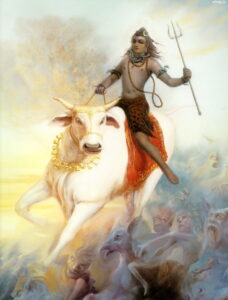 Translation: Obeisances to all-auspicious Lord Śiva. Like the Sun [causing the Moon to shine] He brings forth the lotus face of Gaurī (Pārvatī) to bloom. He destroys the sacrifice of Dakṣa and is blue throated lord [nīlakaṇṭha]. His flag bears the nandi-bull emblem and all this is Him in the syllable शि (śi) of namaḥ śivāya
Like the Sun, He shines forth on all the planets and satellites of the solar system bringing them into the view for the eyes to behold. Reference is to the rūpa (form) caused by the light (agni tattva). Every graha owes its existence to Śiva, here referred to as the auspicious sunlight. Sun in the mantra bhāva is a Śiva worshipper.
The grasp of Dakṣa prajāpati causes all beings to be reborn as dakṣa is the manasa putra of Brahma responsible for granting lagna to all. The word adhvara refers to the yajña or the soma sacrifice that causes progeny from marriages (mating) and a lagna being granted to tall creatures. This lagna is the bondage of the intellect in the consciousness of the body as a false faith of its true self, its nature. Lord Śiva destroys this lagna and the ārūḍha (image) associated thereby freeing the soul from the clutches of Dakṣa prajāpati.
अध्वर adhvara m1. not injuring; m2. a sacrifice (especially the सोम soma sacrifice); m3. N. of a वसु vasu; m4. of the chief of a family; m5. sky or air
During the churning of the karmic sea with Vāsuki tied around the Mandāra mountain, a lot of poison called halahala was produced from the froth coming from Vāsuki nāga as he toiled when 54 devas pulled at his tail (Ketu) and 54 asura pulled at his head (Rāhu). The halahala threatened to destroy the worlds and all inhabitants. Without a thought Lord Śiva drank the poison and held it in His throat, that turned blue. Even today we worship Śrī Nīlakaṇṭha Mahadeva for removing dangerous poisons from our body, mind and soul and healing us. Nīlakaṇṭha Lokeśvara (नीलकण्ठ लोकेश्वर) is worshipped in all regions of the world. We discuss details later.
Dhvaja, the flag is symbolic of the values we stand for. Vṛṣa dhvaja indicates the dharma that Lord Śiva stands for. In the Srimad Bhagavatam it is stated that Lord Śiva worships Bhagavan Jagannath with the following mantra which also indicates His desire for Dharma. In jyotiṣa dharma bhāva is also the jñāna bhāva of the 9th house.
चन्द्रार्क-वैश्वानरलोचनाय तस्मै वकाराय नमः शिवाय॥ ४॥
vasiṣṭha-kumbhodbhava-gautamāryamunīndra-devārcitaśekharāya |
candrārka-vaiśvānaralocanāya tasmai vakārāya namaḥ śivāya || 4||
Translation: Obeisances to Śiva worshipped at the head by Vasiṣṭha, Agastya, Gautama and other sages, Indra and other gods. His three eyes are the moon, sun and fire and symbolised by syllable व (va).
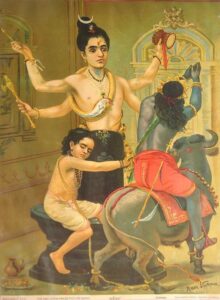 Kumbhodbhava refers to Agastya who was born from a pot (kumbha) instead of normal human birth from pregnancy. Legend has it that Pulastya, one of the saptarṣi is his father. In a yajña of Mitra-Varuṇa being performed by Pulastya, [jyotiṣa: āditya of Mercury and Saturn], the divine damsel apsara Urvashi happened to visit. Her sensuous presence excited Mitra-Varuṇa who ejaculated their semen virile into an earthen pot from which Agastya and his twin Vasiṣṭha were born! [today we call this test-tube baby]. Agastya had the ojas of Mitra-āditya [Me] while Vasiṣṭha had the ojas of Varuṇa-āditya [Sa].
Gautama was one of the foremost Maharṣi who was cannibalised by the rakṣasa. The mighty Bhisma, under the directions of Kṛṣṇa Dvaipāyana Veda Vyasa, annihilated all the cannibals from North India.
Indra and other devas refers to the 33 devas including 12 āditya, 11 rudra, prajāpati and indra-ādi devas. The latter include the devas of svarga loka as well as lokapāla devatā.
He is Tryaṁbaka, the three eyed one who sees (knows) everything. Sun is His right eye, Moon is His left eye and Agni is the third-eye in center of the forehead. Jupiter (devaguru) is the keeper of this eye of wisdom and spiritual knowledge.
दिव्याय देवाय दिगम्बराय तस्मै यकाराय नमः शिवाय॥ ५॥
yakṣasvarūpāya jaṭādharāya pinākahastāya sanātanāya |
divyāya devāya digambarāya tasmai yakārāya namaḥ śivāya || 5 Ⓐ
दिव्याय देवाय दिगम्बराय तस्मै यकाराय नमः शिवाय॥ ५॥
yajña svarūpāya jaṭādharāya pinākahastāya sanātanāya |
divyāya devāya digambarāya tasmai yakārāya namaḥ śivāya || 5 Ⓑ
There are two versions of the last śloka. Difference is in the starting word defining the rūpa or form of Śiva as either Ⓐ yakṣa-svarūpa or Ⓑ yajña svarūpa
Ⓐ Yakṣa are beings associated with Kubera, the god of wealth and Śiva is said to look like a yakṣa with dreadlocks of hair and long beard, wearing a lower garment and body smeared with markings of the śaiva tradition. Śiva is also seen as a giver of wealth of every kind. This version is more popular in the south or among those who have a human form for the Lord.It is for saṅsāra.
Ⓑ Yajña refers to deva yajña which is learning and knowledge. The form described is yajña svarūpa which is exactly as per the Śiva sutra where ‘Śiva matra jñāna rūpa’ i.e. Śiva is only in the form of pure knowledge, is taught. This version is more popular among the Advaita Vedanta. Problem stems from the fact that Viṣṇu is yajña puruṣa and receives all offerings in the fire sacrifice (yajña). Then the only reference of Śiva as yajña-svarūpa must be to deva-yajña.
Translation: Obeisances to Śiva who is the knowledge-form of the deva-yajña. His matted locks of hair [are like thoughts emanating from the deva yajña]. He wields the mighty pināka [bow] and is the Primeval lord. He is the brilliant, effulgent, giver of knowledge [deva of deva yajña] that is sky-clad [ākāśa tattva] and is the essence of the syllable य (ya) in the pañcākṣarī.
There were two pināka [bow] before the advent of Śrī Rama. One was with Rāja ṛṣi Jānaka and the other was with Avatāra Paraśurāma. At Sita marriage, Śrī Rama broke the bow that was with Raja ṛṣi Jānaka and later Paraśurāma handed over his own bow to Śrī Rama for the purpose of annihilating the rakṣasa cannibals. [jyotiṣa: Rāhu falls when the bow string is pulled in Dhanus rāśi].
शिवलोकमवाप्नोति शिवेन सह मोदते॥
paṁcākṣaramidaṁ puṇyaṁ yaḥ paṭhecchivasannidhau |
śivalokamavāpnoti śivena saha modate ||
Translation: Anyone who recites the sacred five syllabled mantra नमः सिवाय (namaḥ śivāya) near a Śiva Liṅga [or any place of Śiva], surely attains Śiva Loka and rejoices there in the presence of the Lord.
Emphasis of Adi Śaṅkara is to recite the pañcākṣarī namaḥ śivāya continuously.


 DBC offers online courses in jyotish (Vedic Astrology) taught directly by Sanjay Rath as per the tradition, through narrated power points and other audio tools. The courses are at different levels, from the beginners through the intermediate to the advanced and are known as SoHamsa | DBC courses, with individual classrooms and assistant teachers
 Sagittarius Publications is the publisher and distributor the popular quaterly magazine the Jyotish Digest, as well as many thorough books on the subject of Vedic Astrology or Jyotish.