
The Vidyeśvara saṁhitā starts with the discussion on ‘sādhanā and sādhya’. Brahma has explained sādhya to mean the very objective of human birth. That source of the primordial sound (vac) which cannot be accessed by the manas (mind at all levels), that source where from Brahma, Viṣṇu and Rudra emerged with all the devas (and other beings), the pañca māhābhuta (primordial elements) and organs, is the sādhya, the objective of sādhanā. He, that Iṣa, is Mahādeva, the omniscient lord of the universe (jagadiśvara). He can be known (visualized) through intense devotions, else He is invisible to all. All the devatā including Rudra, Hari, Hara, Devendra (Indra) develop intense devotions for Mahādeva for the sake of an audience.
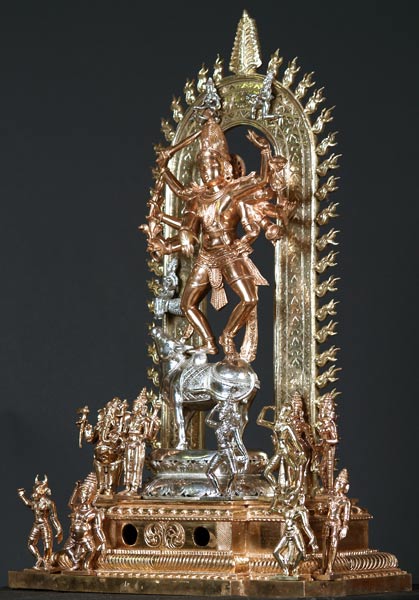 Notes : The trimūrti Brahma Viṣṇu and Rudra worship Iśa with different names which is due to their prevailing natures (guṇa). these three are the highest among all the devatā and are called guṇa avatāra. Brahma worships Iśa (Iśvara) with the name Mahādeva, derived from diva<sup[1] and thereby seeking enlightenment. Brahma simply copies Viṣṇu of adding नमः (namaḥ) in the end and also likes to take credit for this due to ahamkara.
Viṣṇu worships Iśa with the name Maheśvara for the purpose of emancipation of all souls. In jyotiṣa we know that this connects with the 8th house from chara ātmakāraka, the carrier of karmic linkages from past incarnations in the form of debts. This name is the closest to Iśa as Iśvara. Note the नमः (namaḥ) in the end of the mantra. This is the teaching of Viṣṇu for Shukla paksha mantra. Oh yes, mantra also have shukla and krsna paksha. Shukla mantra are नमः अन्त्य (namaḥ antya) meaning नमः (namaḥ) should be at the end of the mantra. This becomes the atma-pallava. Be conscious of where this नमः (namaḥ) is placed in a mantra.
Rudra worships Iśa with the name Śiva meaning auspicious whereby all that is inauspicious and causing suffering and pain, is removed. So does Śakti but adds the नमः (namaḥ) in the end as She is the sister of Viṣṇu and prefers His sage advise.
Śiva bhakti leads to emancipation and this bhakti is the fruit of sincere devotion to Śiva, which is also granted by Śiva.
There is a catch in this statement. Bhakti is a combination of devotion, services, love and knowledge. This develops through a process of spiritual practice called sādhanā. Initially this process may seem mechanical, like eating food. But, with time, it changes the psyche and every moment of bhakti is realised like eating delicious food.
The last syllable of Sanskrit ‘ha’ (ह) is the seed syllable for Śiva bhakti. The essence of bhakti is as much in the seed as it is in the shoot, sprout or blade (leaf).
This last syllable ‘ha’ (ह) is used with difference paths to approach Śiva.
- Hanuman is Rudra avatāra and veda mūrti for atharva veda. Brahma Jñāna is in the first syllable ‘a’. The seed ‘haṁ’ (हं ) is used to worship Hanuman and leads to Iśa (Śiva Bhakti).
- The trimurti Brahma, Viṣṇu and Rudra are represented by auṁ (औं) and this suffixed to ‘ha’ (ह) to get the Sadāsiva bīja hauṁ (हौं).
- Sūrya adds the Agni bīja ‘ra’ (र) to the Sadāsiva bija and worships Iśa with the most powerful jyotishmantra ‘ha’ (ह) + ‘ra’ (र) + auṁ (औं) + hauṁ (हौं).
- Devi always worships Śiva with the famous ramā bīja where the śiva bija ‘ha’ (ह) is added to Agni ra’ (र) and śakti ī (ई) to get hrīṁ (ह्रीं).
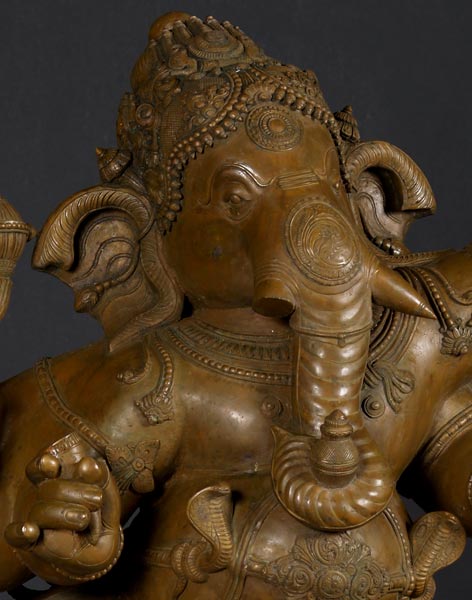
- Ganesha worships Iśa for the sake of suppression of all evils and obstacles by adding u (उ) to the Śiva bija = huṁ (हुं).
In this manner all the devatā are worshipping Śiva and the people approach Iśa through one of these paths.
[1] divu -meaning light

 DBC offers online courses in jyotish (Vedic Astrology) taught directly by Sanjay Rath as per the tradition, through narrated power points and other audio tools. The courses are at different levels, from the beginners through the intermediate to the advanced and are known as SoHamsa | DBC courses, with individual classrooms and assistant teachers
 Sagittarius Publications is the publisher and distributor the popular quaterly magazine the Jyotish Digest, as well as many thorough books on the subject of Vedic Astrology or Jyotish.