
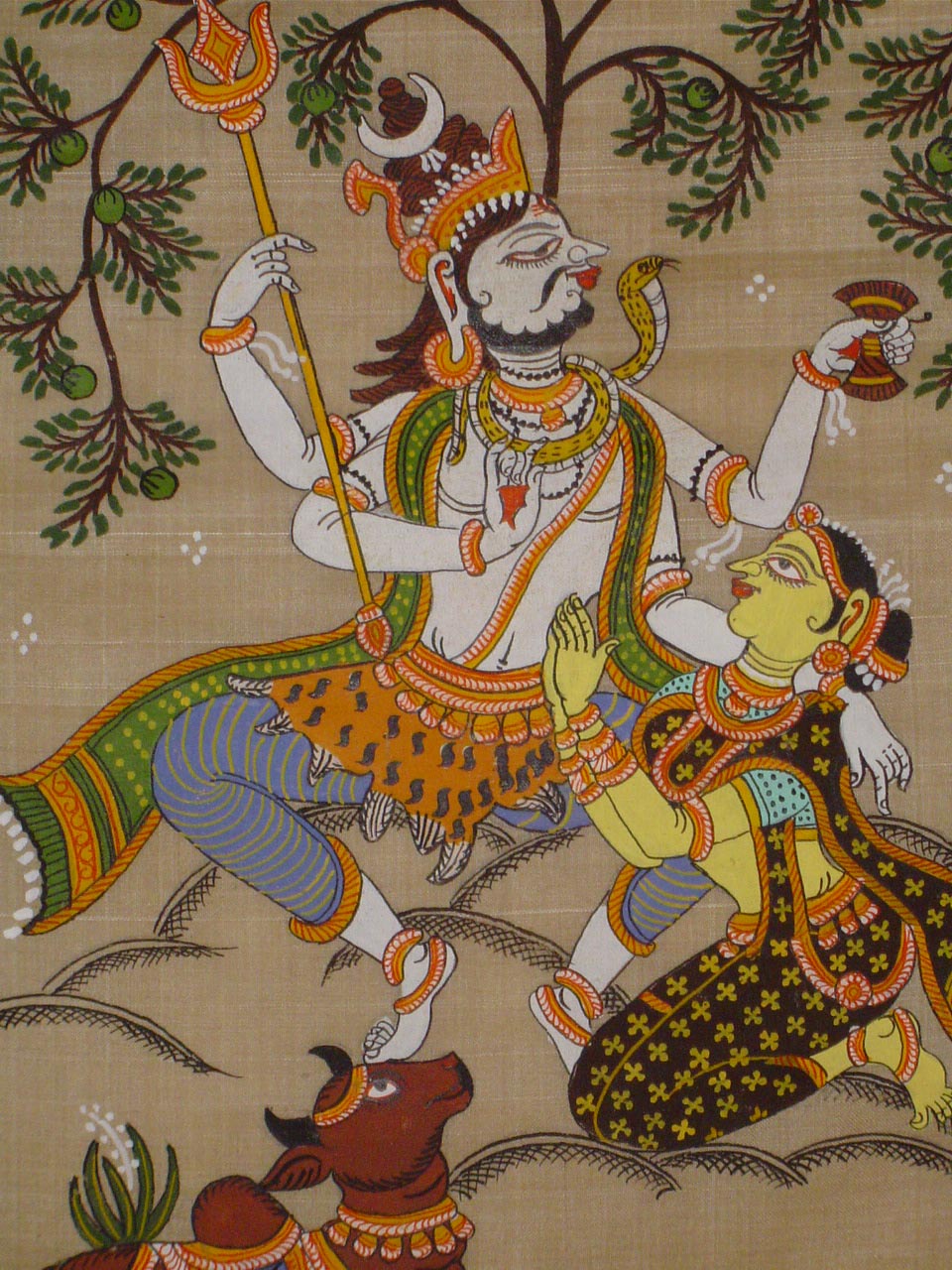
Śrī Sūta continues that this great purāṇa was originally narrated by Lord Śiva himself. Thereafter Vyāsa narrated this to Sanatkumāra for the benefit of the people under Kali [Yuga].
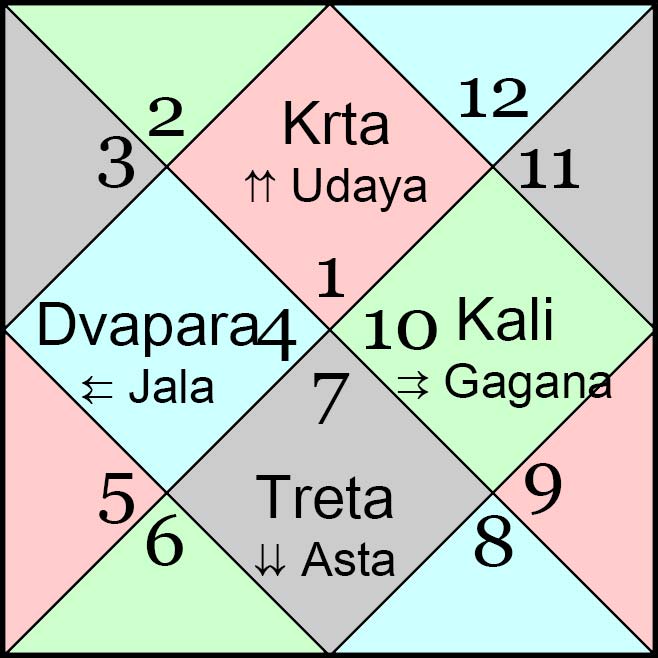
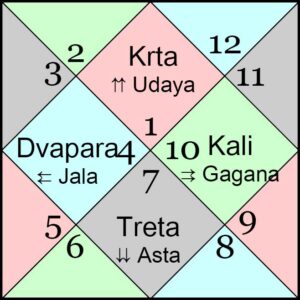 The word कलि (kali) is generally taken to mean the yuga but it also means the sign Capricorn in jyotiṣa as it is the kali-yuga rāśi. This sign in the southern quarter of the zodiac is the house of Yama which is also the direction of the sign Capricorn. The dead (corpse) is always kept with its feet to the southern direction. For this reason people should never sleep with their feet to the southern direction. If you are visiting or in a hotel, then check the direction of the bed. If the feet are pointing to the south, just change the pillows to the opposite direction so that your feet are facing north instead.
नक्र (nakra)
In jyotiṣa, the word नक्र (nakra) refers to two signs Capricorn and Scorpio associated with the death energy. Parāśara uses ‘nakra’ specifically for Capricorn as it indicates crocodile or alligator. It also indicates disease of the nose or any serious blockage to breathing. When planets are in Nakra rāśi or aṁśa, or in the signs of Saturn or Mars, or associated with these malefic tamas planets, then reading of the Śiva Purāṇa is the best remedy for alleviating suffering associated with the bad karma.
Śrī Sūta continues, “The Śiva Purāṇa is not only the best of the Śāstra, and is also the true form of Lord Śiva on this planet (earth). Therefore it should be read, narrated, heard and studied thoroughly. One who does so with devotion attains Śiva-pada and everything that can be desired. Continuous study of the Śiva Purāṇa relieves one of all sins and leads to the attainment of Śiva-Loka. Mere listening to the Śiva purāṇa leads to greater merits than the performance of the rājasūya or other yajña.”
The manner in which this happens has been explained by Śrī Sūta. Lord Śiva starts to live in the heart of the devotee. The person gradually changes and becomes like Lord Śiva thereby preparing for his last abode at Śiva-Loka.
The study requirements have been explained as follows: –
- People who have the capacity and determination of making this purāṇa study a habit, should do so. The minimum requirement is to study the purāṇa every day for at least two muhurta (96 minutes). It is imperative that during this study his senses should be completely controlled.
- People whose lifestyle and nature is such that they cannot be regular should choose auspicious months [lunar or solar] and take up the study in an exclusive undisturbed environment where they can control their senses. The word used by Śrī Sūta is ‘punya-māsa’.
- For specific remedial measures to alleviate some suffering or misfortune, the practise duration can be short like one muhurta (48 minutes), one ghāṭi (24 minutes) or shorter.
परो धर्मो न पुंसां हि मुक्तिसाधनकृन्मुने॥२५
viśeṣataḥ kalau śaivapurāṇaśravaṇādṛte|
paro dharmo na puṁsāṁ hi muktisādhanakṛnmune || 25
Translation: Particularly for Kali [Yuga], the best dharma is to listen to the Śiva Purāṇa that will lead to the achievement of mokṣa (emancipation).
Śrī Sūta explains that the human being wonders in this world overpowered by the darkness of ignorance till such time that the holy words of the Śiva Purāṇa are heard by him. By merely listening to this purāṇa, the worldly fetters are automatically removed.
The house where the Śiva Purāṇa is read becomes a sacred spot and previously it was stated that Lord Śiva resides in the heart of the devotee. Therefore one should always listen to the Śiva Purāṇa whose words singularly and continuously thunder the need for salvation [of the soul]. A person can be called a sinner till such time that he has not heard the Śiva Purāṇa. Neither the cleansing waters of the seven rivers1, or the seven spiritual cities2, or even the great Gayā cannot match the purification power of the Śiva Mahāpurāṇa.
The Śiva Purāṇa is the highest remedy for calming and pacifying the manas. It becomes the foundation of every mantra. The divine Śiva Purāṇa comprising of seven saṁhitā equates to parabrāhman and therefore gives mokṣa.
Kali Yuga = Makara = Naisargika 10H Cp
For Kali Yuga Cp, moksha bhava = 12H from Cp = Sg
Therefore Shiva Purana = Shiva Jnana is the giver of moksha during Kali Yuga
कल्पद्रुमफलं सम्यञ्मनुष्याणां न संशयः॥
purāṇaśravaṇaṁ śambhornāma saṁkīrtanaṁ tathā|
kalpadrumaphalaṁ samyañmanuṣyāṇāṁ na saṁśayaḥ || 26
Translation: [The daily practise which includes] (a) Listening [or reading] the Śiva Purāṇa and (b) Japa – recitation of the name(s) of Śiva. Without an iota of doubt, this bestows fruits like the Kalpadruma (wish-fulfilling celestial tree).
Śrī Sūta adds the following verses for the benefit of the daily practise.
One verse of the Śiva Purāṇa must be recited every day. Although for those not conversant with Sanskrit, an allowance of half a verse has been made.
The method of reciting the verse is to repeat it thrice. This is shown in the śloka-293 where ‘sadā-sevyā’ has been repeated thrice.
Thereafter, it is imperative that the verse must be studied to fully understand the meaning. Alternatively, if such a thorough study cannot be done, the śloka must be repeated like a chant. Such a person becomes a noble soul. [śloka-43]
The prayer made before the recitation and/or study is given below. This is stated once.
शिवः प्रसन्नतां यायाद् दद्यात्स्वपदयो रतिम्॥ २-५१
vande śivapurāṇaṁ hi sarvadā’haṁ prasannadhīḥ|
śivaḥ prasannatāṁ yāyād dadyātsvapadayo ratim|| 2-51
A person who listens to the recitation of the Śiva Purāṇa at the time of his death is saved from the abode of Yama, the god of death and instead proceeds to the feet of Lord Śiva. [śloka 44]
1. Ganga, Yamuna, Sarasvatī, Godāvarī, Narmadā, Siṅdhu, Kāverī. These names are generally taught. However a deeper meaning is for the seven rivers separating the sapta loka.
2. Ayodhyā, Mathura, Māyāpurī, Haridvāra, Kāśī, Kāñchi, Avantikā [and Dvārkā]. These names are for bhu-loka. However the seven spiritual cities are the sapta-loka themselves. These are added as vyahrti in some mantra associated with agni that cause spiritual travel along the kundalini in the vertical direction.
3. सदा सेव्या सदा सेव्या सदा सेव्या विशेषतः। sadā sevyā sadā sevyā sadā sevyā viśeṣataḥ|

 DBC offers online courses in jyotish (Vedic Astrology) taught directly by Sanjay Rath as per the tradition, through narrated power points and other audio tools. The courses are at different levels, from the beginners through the intermediate to the advanced and are known as SoHamsa | DBC courses, with individual classrooms and assistant teachers
 Sagittarius Publications is the publisher and distributor the popular quaterly magazine the Jyotish Digest, as well as many thorough books on the subject of Vedic Astrology or Jyotish.