
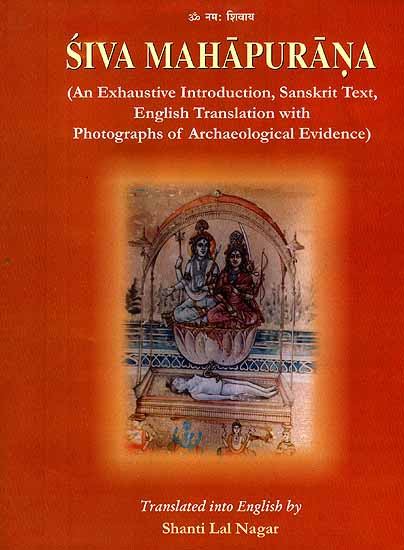
In reply to the auspicious question of Śrī Śaunaka which was framed in exactly five śloka, emulating the energy of the glorious Śiva pañcākṣarī, Śrī Sūta agreed to narrate the divine Śiva Purāṇa. The word purāṇa indicates that it is very ancient, even for the vedic seers! Purāṇa is a verbal record of histories and teachings bringing out the socio-religious culture of the vedic seers.
Śrī Sūta explains that the Śiva Mahāpurāṇa comprises all the siddhānta (principles), causes continuous enhancement of the bhakti (spiritual love, devotion) to Lord Śiva, delights Lord Śiva, is divine in its merits (i.e. it is expounded by the divine Lord) and is the highest rasa (nectar) for the ears. The allegory ‘nectar for the ears’ indicates that this is guru-upadeśa and by merely listening (and reading) this purāṇa causes guru dīkṣa.
Protection
kāla-vyāla-mahā-trāsa vidhvaṁsa-karam-uttamam
Translation: The Śiva purāṇa is the greatest destroyer of all evils represented by kāla (time personified at death), vyāla and mahā-trāsa.
काल (kāla)
generally refers to Saturn, the significator of death which is the last moment (time). It is bluish-black colour. It retains the power of the trimūrti – Brahma क (ka); Vāsudeva आ (ā); and Rudra ल (la); ल (la) for Rudra is taken from the word लय (laya) which is the root of pralaya. Kāla represents the negative side of all the graha – every graha has good and evil associated with it and kāla is the negative or tamas guṇa associated with the graha.
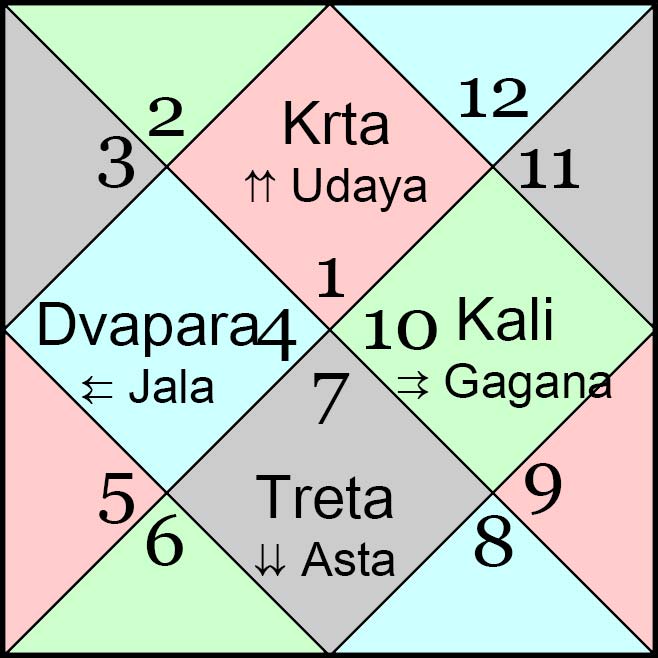
A graha (jyotiṣa-planet) gets negative tamas guṇa through various means like owning the duṣthāna (6th, 8th or 12th bhāva) or conjoining these signs or their lords. Even aspects from duṣthāna lords brings tamas guṇa into it. Ownership of khara drekkāṇa or various other jyotiṣa factors like bādhaka can attach negative karma to the graha. It is the negative karma that has tamas guṇa which is signified by kāla. The kālachakra has eight spokes in the eight primary directions with the axil representing the vertical.
Kāla can be any measure of time as well. It is time as the destroyer of everything and therefore is death, represented by the coming of Yama the god of death. Kāla is that ‘time’ which leads to events, the causes of which are imperceptible to the mind of man and are therefore called destiny or fate. It is the lack of proper knowledge of such karma that makes the mind tamas and brings forth fears of death and losses. Veda represents all knowledge which negates the tamas. The six purāṇa that are referred to as ‘tamas’ are actually the remover of tamas guṇa as they remove fears and misgivings.
व्याल (vyāla)
means mischievous, wicked and vicious destroying wealth and life like a vicious elephant. It also refers to a beast of prey like a snake, lion, tiger or leopard. In jyotiṣa it refers to Vṛścika Drekkāṇa (i.e. the second drekkāṇa in Cancer, the first in Scorpio and the third in Pisces). It also refers to the ominous power of the number ‘eight’ as bringing the evils of Saturn (vedic numerology) or the khara drekkāṇa (drekkāṇa of 8th bhāva) or the 8th sign Scorpio as being very violent and sudden. In jyotiṣa it also refers to one of the three retrograde stages, particularly indicating the behaviour of a retrograde planet to be akin to the planet Mars (violent).
त्रास (trāsa)
means fear and the adjective mahā (great) attached to it points all sorts of great fears like terror that cause great anxiety. It also refers to a flaw in a jewel or jyotiṣa-gemstone which can bring forth great fears and anxieties.


 DBC offers online courses in jyotish (Vedic Astrology) taught directly by Sanjay Rath as per the tradition, through narrated power points and other audio tools. The courses are at different levels, from the beginners through the intermediate to the advanced and are known as SoHamsa | DBC courses, with individual classrooms and assistant teachers
 Sagittarius Publications is the publisher and distributor the popular quaterly magazine the Jyotish Digest, as well as many thorough books on the subject of Vedic Astrology or Jyotish.