Confirming this as the teaching of the Vedas1, Nandikeśvara says, “In the first sveta-varāha-kalpa at the beginning of creation, there ensued a big battle between Brahma and Viṣṇu when Brahma wanted Viṣṇu to salute him for being a great preceptor while Viṣṇu tried to correct him by reminding Brahma that he was, in essence, a son having emerged from the lotus that grew from the navel of Viṣṇu. Brahma mounted Haṁsa (swan) and showered arrows including the paśupata astra while Viṣṇu mounted the Garuḍa (golden eagle) and countered with equally powerful arrows and the Maheśvara astra2”
At the behest of the devas, Śrī Iśvara and Pārvatī arrived at the battle ground riding the Bhadra-rath which is decorated with the pañca maṇḍala3 whereby Lord Śiva controls time and is Mahākāla. At that very moment Brahma released the Paśupata astra and Viṣṇu released the Maheśvara astra which caused flames to rise in all the three worlds4. To prevent the untimely dissolution of the worlds, Śiva appeared before them in the form of a great column of light called Mahānalastambha5 which was the manifestation of the absolute Brahman. Both the Paśupata astra and Maheśvara astra collided with this vast column, the Mahānalastambha and were destroyed in its mighty fiery light. The devas were astounded and both Brahma and Viṣṇu stopped battle to examine the column. They wondered, “what is at the top of this column and what is its support at the base?”. Believing themselves to be valourous and mighty, they embarked on a journey to determine the base and top. Viṣṇu being the more wise, observed that they would be wasting effort and duplicating tasks if they travelled together. Instead Brahma took the form of the swan (haṁsa) and flew upwards to seek the top while Viṣṇu took the form of a boar (Varāha) and went down piercing through pātāla loka to determine the base of the column.
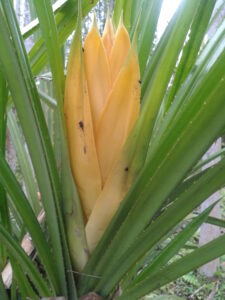
When Viṣṇu did not find the base of the endless column, He returned tired. Lord Śiva started laughing and a Ketaki flower6 lodged inside the column started falling. Brahma had a similar fate and was unable to find the top of the column. While flying he saw the Ketaki flower falling. The Ketaki flower, severed from the stem of its plant, had been lodged in the middle of the column and had not lost its fragrance. Brahma wanted to trick Viṣṇu into submission and begged the Ketaki to stand witness stating that it is not a sin to speak untruth at the time of misfortune, and that this was propounded in the śāstra. On seeing Viṣṇu exhausted, Brahma started dancing in glee and lied, “Hari, I have seen the top of the column and this Ketaki flower is witness”. Accepting defeat Viṣṇu saluted him and worshipped Brahma with sixteen offerings (ṣoḍaśa upacāra).
- Nandikeśvara is the veda mūrti for the Ṛk Veda, and is therefore the highest Vedic authority
- Even in battle Viṣṇu was calm and did not use the Sudarśana chakra against Brahma
- five maṇḍala (yantra), three dimensional diagrams that depicts the control of time (pañcāṅga) by controlling the elements that map into the pañcāṅga. Agni maṇḍala maps into vāra (weekday); vāyu maṇḍala maps into nakṣatra; jala maṇḍala maps into tithi; pṛthvi maṇḍala maps into karaṇa and ākāśa maṇḍala maps into yoga.
- bhū, bhuva and svarga loka
- agni liñga presently at Arunachalam, Tamil Nadu India; associated with the penance of Ramana Maharṣi.
- The flower of Pandanus odoratissimus. This enchantingly fragrant flower of literary fame, is known as one of the five arrows of Kāmā (Cupid). Although this flower is not to be used for the worship of Śiva, yet it is the most preferred flower to worship Siva on the Śivarātri day in the Liñgarāja temple in Bhubaneswar and in the other Śiva temples of Orissa. The prayer is to remove all sins caused by lies and bearing false witness on narka caturdasī (Śivarātri). It is carried to bear witness during the confession made at the Śiva Liñga.

 DBC offers online courses in jyotish (Vedic Astrology) taught directly by Sanjay Rath as per the tradition, through narrated power points and other audio tools. The courses are at different levels, from the beginners through the intermediate to the advanced and are known as SoHamsa | DBC courses, with individual classrooms and assistant teachers
 Sagittarius Publications is the publisher and distributor the popular quaterly magazine the Jyotish Digest, as well as many thorough books on the subject of Vedic Astrology or Jyotish.