
Śrī Suta wanted to remove the notion of best sādhana to attain śivapada and to show that all the means and methods (sādhana) adopted to achieve the end (sādhya) are equally important and mutually supportive. He narrated an episode relating to Śrī Vedavyāsa and Śrī Nandi.
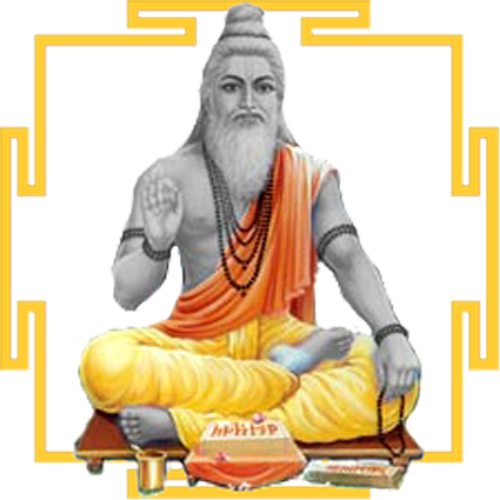
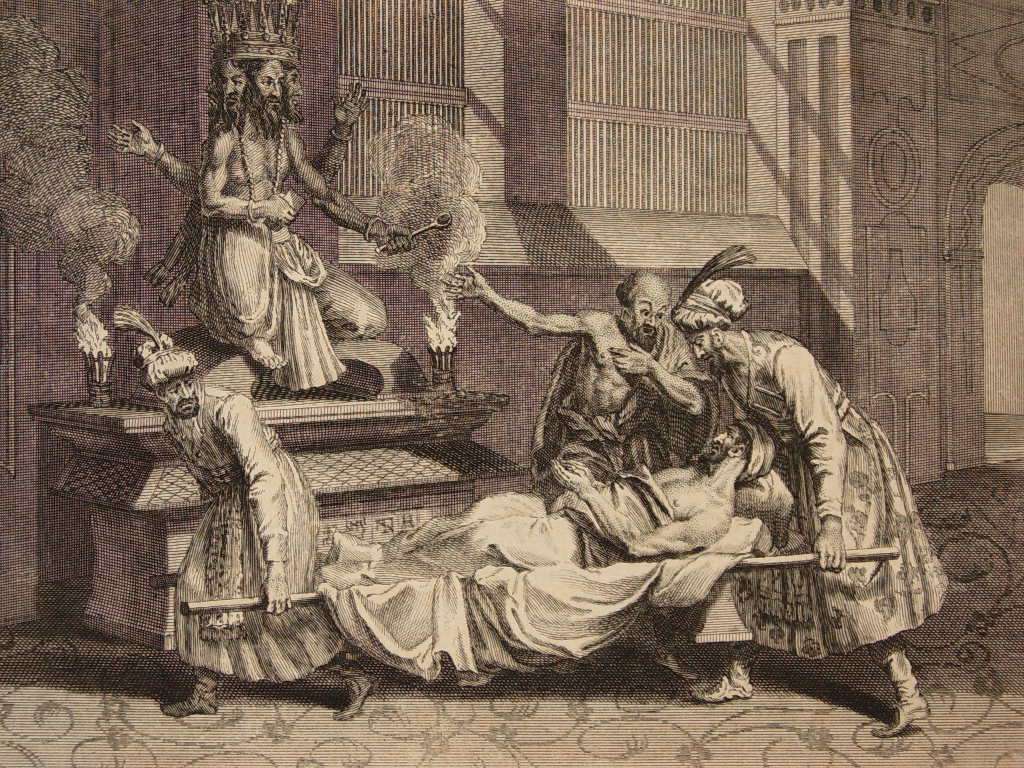 During the Vedic period Śrī Vedavyāsa, son of Parāśara, was performing penance at the banks of Sarasvatī. Śrī Paraśurāma spotted an aircraft with brilliant lights and Śrī Sanatkumāra, the son of Brahma, alighted from it. Although in deep mediation, Śrī Vedavyāsa opened his eyes and offered customary salutations which included the washing of feet and a seat fit to be offered to devatā. Sanatkumāra asked, “O great sage, when you have the ability to perceive Śiva with the sense organs, then why do you meditate on the truth of Śiva tattva and perform the penance?”.
Sri Vedavyāsa is considered a joint avatāra of Śiva and Viṣṇu and is worshipped with the mṛityanjaya bya mantra ‘oṁ juṁ saḥ” as well as the Vyāsa mantra which establishes dharma” vyām vedayā sāya namaḥ”. The former is his Siva incarnations portion and the latter in his Viṣṇu incarnations portion. The complete mantra to worship him has been taught by Mahidhāra (Mantra Mahodadhiḥ).
om jūṁ saḥ vyāṁ vedavyāsāya namaḥ saḥ jūṁ om
Sri Vedavyāsa spoke, “O Sanatkumāra you always uphold the Vedic path composed of the four āyana – dharma, artha, kāma and mokṣa. By your grace I have specifically meditated on the Lord of the worlds (Lord Śiva), by your grace and an also the guru (preceptor) of all souls in this world for all tune.”
Whereas Bṛhaspati is the preceptor of the sura and Śukra is the preceptor of the asura, Śrī Vedavyāsa in the preceptor of all the creatures in this world and particularly of manuśya (human beings). Vedavyāsa is a title applicable to different sages in different (yoga). Parāśara himself was the Vedavyāsa in the previous yuga. But for the present kali yuga Kṛṣṇa dvaipāyana, the son of Parāśara, is the Vedavyāsa.
Sri Vedavyāsa continued, “The mukti sādhanā (penance of emancipation) which is the supreme knowledge of advaita (non-duality) fails to crystallize in my mind. Reasons for this are unclear and for the purpose of emancipation, we are performing this penance.”
Sri Sanatkumāra clarified, that Vedic knowledge can be obtained in three ways and the three sādhanā are called (1) śravaṇa (2) kīrtanaṁ and (3) mānasaṁ i.e. listen, recite and contemplate on Śiva. This was taught to him by Bhagavān Nandikeśvara who was accompanied by the omniscient all-witnessing Lord Gaṇeśa.
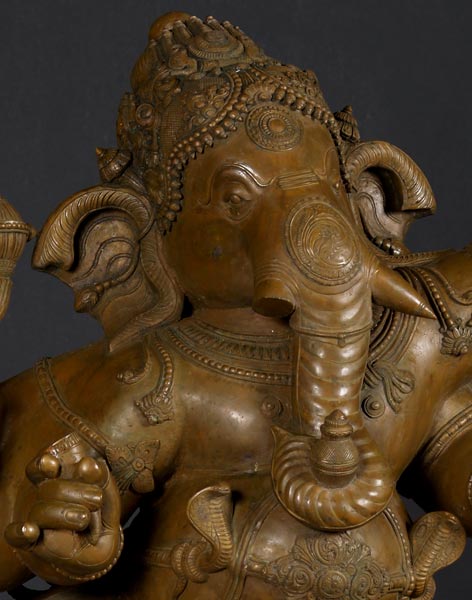
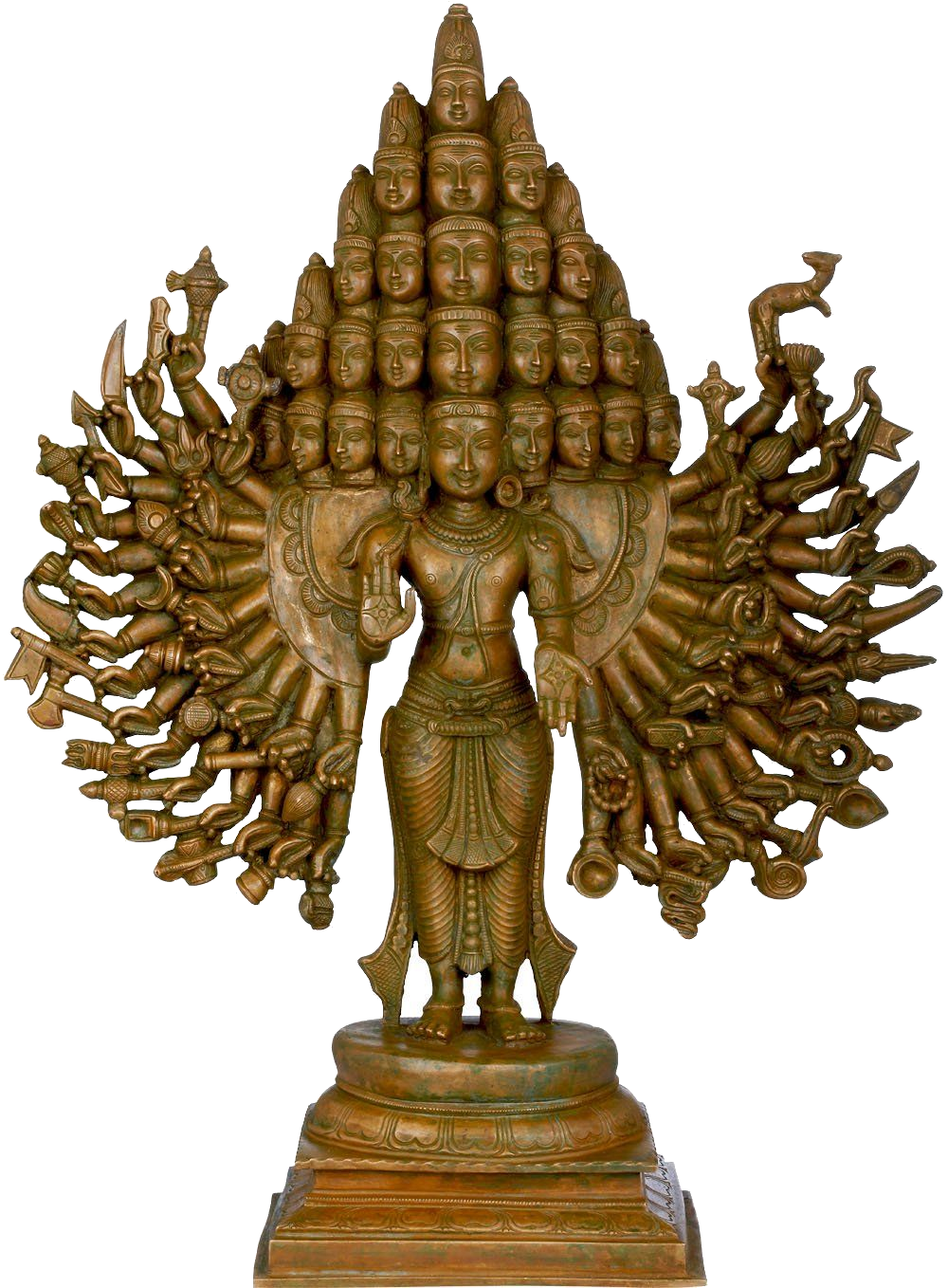
Tradition teaches that the four Vedas are taught by the vedamūrti (four forms of Vedic teacher). Gaṇeśa having a human body and head of elephant is the omniscient, all witnessing teacher. These forms are symbolized by Ketu, the headless planet (ignorance) who gets a new head by the grace of a devatā. Gaṇeśa got his elephants head by the grace of Sri Viṣṇu (ākāśa tattva – Jupiter, elephant).
| Veda | Tattva | Manas | Animal head | Name | |
| Sarva | Ākāśa | Jupiter | Elephant | Gaṇeśa | Gaja mukha |
| Ṛk | Jala | Venus (+Moon) | Cow | Nandikeśvara | Nandi-mukha, Go-mukha |
| Yajur | Pṛthvi | Mercury | Horse | Hayagriva | Haya-mukha |
| Sāma | Vāyu | Saturn | Goat | Ajaikapāda | Aja-mukha |
| Atharva | Agni | Mars | Monkey | Hanumant | Hanu-mukha |
| Itihāsa Purāṇa | Sun | Eagle | Garuḍa | Garutman |
Siddhi mantras : mentioned in the Śiva Purāṇa
om lakṣalābha yutāya siddhī buddhī sahītāya gaṇapatayei namaḥ
The vedamūrti are worshipped with reference to their mouth (mukha) which speaks the veda. The mind must be completely focused on the mouth of the vedamūrti. Further Śrī Achyutananda has recommended the formula for the veda ~
सस-वद पर-रज | sasa-vada para-raja » includes the four veda like sasa is for Sāmaveda
gajamukha sididharastuनन्दीमुख सिदिधरस्तु
nandīmukha sididharastu
An important teaching of Sri Sanatkumara has been the advise that Sri Ganesha be worshipped along with the specific Vedamantra before starting the sādhana.

 DBC offers online courses in jyotish (Vedic Astrology) taught directly by Sanjay Rath as per the tradition, through narrated power points and other audio tools. The courses are at different levels, from the beginners through the intermediate to the advanced and are known as SoHamsa | DBC courses, with individual classrooms and assistant teachers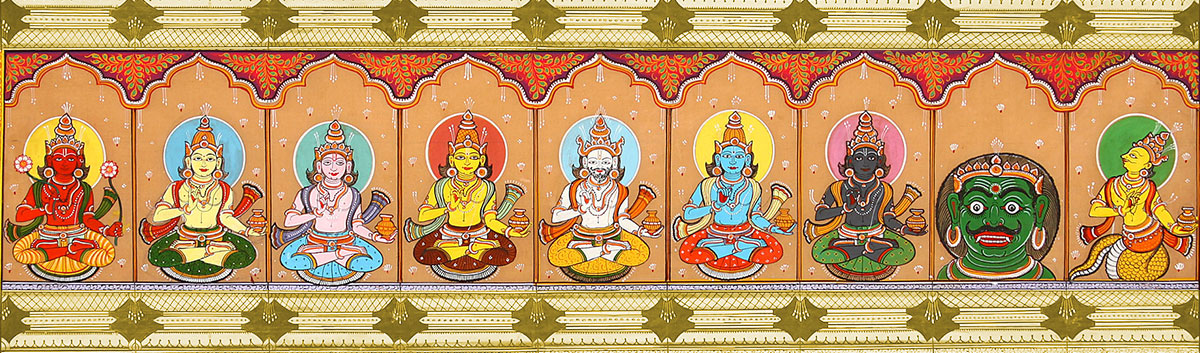
 Sagittarius Publications is the publisher and distributor the popular quaterly magazine the Jyotish Digest, as well as many thorough books on the subject of Vedic Astrology or Jyotish.