
There are three types of sadhana based on the three guṇa. This is not a reflection of the guṇa of the native but a reflection on the spiritual effort he makes in this journey. Not all people are the same and their effort is also not the same.
मुख्य साधन Mukhya Sādhana

Mukhya sādhana, the best of all means includes (1) pujā, (2) japa and (3) dhyāna on the guṇa (nature) and rupa (form descriptions). The sheer pleasure derived in reciting the name of Śiva purifies the mind which becomes the source of excellent thoughts (that leads to great action-karma yoga).
माध्यम साधन Madhyama Sādhana
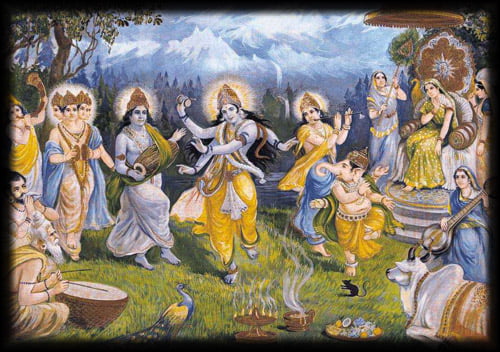
Madhyama sādhanā, the middle path consists of (1) singing stotra (poems) and songs (2) singing of Vedic hymns (3) offering eulogies in one’s own language about Śiva’s might, prowess, kindness and other attributes.
श्रवण साधन Śrāvaṇa Sādhana
Śravaṇa sādhanā includes every way in which the words praising lord Śiva enters ones ears. Listening to discourses, recitations, songs and mantra are included in śravaṇa sādhanā. In whichever manner the indriya (sense organs) perceive anything related to Śiva, is a part of śravaṇa sādhanā.
The three types of sādhanā taught by Sri Vedavyāsa pertain to people in kali yuga and are based on the three guṇa. The mukhya sādhanā is personal, performed in solitude and of sattva guṇa.
The madhyama sādhanā involves interactions with other people while using the karmendriya (action organs). The use of the actions organs causes the worship to be slightly in the mode of rajas guṇa.
The śravaṇa sādhanā involves the use of jñānendriya (sense organs) which causes the worship to be slightly in the mode of tamas guṇa due to indriya bhoga. Native is enjoying something through the indriya – and that in itself is a disturbance even though it is spiritual.




 DBC offers online courses in jyotish (Vedic Astrology) taught directly by Sanjay Rath as per the tradition, through narrated power points and other audio tools. The courses are at different levels, from the beginners through the intermediate to the advanced and are known as SoHamsa | DBC courses, with individual classrooms and assistant teachers
 Sagittarius Publications is the publisher and distributor the popular quaterly magazine the Jyotish Digest, as well as many thorough books on the subject of Vedic Astrology or Jyotish.