
Nirukta – The Root
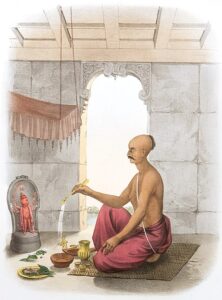 In normal usage nirukta means ‘explanation or etymological interpretation of a word’ which includes, in its truest sense –
- Meanings from the manner it is uttered or pronounced
- Meanings from the manner it is expressed, explained or defined
- Meanings that it is declared for or explicitly mentioned or enjoined to mean by previous definitions or other usages
- Containing the name of deva (illuminator, god, devatā)
- When interpreted in a certain manner it becomes manifest or fulfils the conditions that cause its meaning to manifest
The document titled ‘Foundation of Vedic Astrology’ available in your class webpage gives three uses of the word horā. It would be a nice exercise to go into its very root, determine all the meanings as well as the deva associated with ‘aho’ (day) and ‘rātra’ (night) which are the etymological roots of the word[1]
Every word of Sanskrit has roots called bīja (बीज) and these seeds combine in multiple ways following the various rules of combinations called saṇdhi which is the phonology of the language. These combinations form meaningful words or seemingly meaningless longer seeds which are also called bīja. There are different approaches to the study of these roots of the subject based on different philosophies and books on bīja-nighaṇṭu can be consulted.
What we need to know is how this is done, or the process of finding the seed syllable. Firstly, every school has one abhidhāna[2] where the words associated with a letter are listed forming vocabulary lists. Secondly, there are kośa where the syllables and sounds are listed along with their devatā. Kośa vary from one religious school to another and one school can have multiple kośa to accommodate different devatā and their forms. Bīja, the seed is a secret in that unless it is verbally spoken by the Guru into the ear of the śiṣya, it is unfruitful. The bīja is the first and real mantra that is given by the Guru as this alone is the real devatā. For this reason it is signified by ākāśa tattva which is ruled by Jupiter (guru) and symbolises the ear of the Kālapuruṣa.
Bīja are derived in many ways. An example of derivation of bīja is given below. The text reads “Those who recite this golden bīja[3] that reads ‘bakam joined with vahni and trimūrti strongly fixed therein by the Moon‘ everyday shall attain the highest prosperity. The clue lies in finding the śabda-artha (meanings of the words) and looking up the correct abhidhāna-kośa, we find the following –
- bakam = śa (श);
- vahni, agni = ra (र);
- trimūrti = ī (ई);
- śaśāṅka or Moon is the nāda with biṅdu = ँ.
Now combine these to get the Lakṣmī bīja śrīṁ (श्रीँ).
Understanding bīja is not easy and the general understanding that it is a physical seed is very wrong as when the guru speaks mantra into the ears of the śiṣya, what is being transferred is definitely not physical in any sense. After a lot of debate, the learned scholars come to a conclusion that bīja is śaktī or is of the form of śaktī[4]. This goes against the very vein of Nirukta in that bīja is of the nature of ākāśa tattva whereas śaktī is agni tattva (energy). These scholars rely heavily on the more recent āgama texts (bījastha śaktīrupaḥ) and commentaries of Medhātithi and others on Manu smṛti who say that it is of the nature of śaktī or of kuṇḍalini yoga where the manifest kuṇḍalini śaktī is seen as the bīja.
In both sāṁkhya and vedānta, bīja manifests as prākṛti or māyā and Kṛṣṇa is clear in the Gītā that He is the bīja of every creature thereby being the [spiritual] father. Therefore the bīja must have two primary aspects to it –
- Prākṛti, the material nature through which everything manifests which must include śaktī or energy to bring forth the desired change or manifestation. This includes pṛthvi, jala and vāyu tattva defining the physical nature as well as agni tattva defining the śaktī. Normally, the proportions and combinations of the pṛthvi, jala and vāyu are more or less similar or similar objects. What varies considerably is the agni tattva and this being observable variation has been taken to mean bīja by most authors and commentators.
- Puruṣa, the ākāśa nature that is the intelligence in the bīja which defines its purpose and sets the goal to be achieved. The relationship between Puruṣa and Prākṛti can be said to be like that of a teacher (puruṣa) and student (prākṛti) and their discussions are recorded as that between Śiva and Pārvatī in various tantra texts. In the Gītā, Kṛṣṇa is the puruṣa and is the essence of the bīja who defines its goals.
Let us examine one case of ‘retas’ (semen) which is often cited as bīja (seed) of birth. The semen carries the genetic makeup of the creature which is the pṛthvi, jala, vāyu tattva combinations. Every spermatozoa, when released has energy to swim, which is its śaktī.
- All semen that is released during copulation does not fertilize the ovum. However, all the semen have energy and try to swim to the ovum and therefore, they have varying śaktī. Yet most of the spermatozoa fail to achieve the objective of fertilising the ovum and are destroyed because the ovum is not ready or are defeated while swimming. Therefore they are not the bīja which is to create offspring and lack the power of Kṛṣṇa (puruṣa).
- Finally one day one spermatozoa defeats the others in the race and is able to fertilize the ovum. This undefeated one (jiṣṇu) has the blessings of Viṣṇu which causes him to win and has shown the first signs of being the bīja.
- The pregnancy has to survive nine months or so depending on the creature and finally a baby maybe born. If the bay is born then the original objective of the spermatozoa has been fulfilled, else it is a fruitless seed and cannot be a real bīja in the terms of the definition.
This power to create life, to alter life processes and manifest things is the ākāśa tattva. Seed syllables can be learnt from books but they are like the useless spermatozoa who will surely fail on the way. The tradition (paraṁparā) is the means by which a guru continues to infuse the śiṣya with such mantra bīja that causes knowledge to manifest within him. This transmission through the right ear is called dīkṣa.
[1]Sārāvalī, Kalyāṇavermā ch1.[2]dictionary or lexicon
[3] बकम् वह्निसंस्थितं त्रिमूर्तेय प्रजुष्टं शशाङ्केन युक्तम् | bakam vahnisaṁsthitaṁ trimūrteya prajuṣṭaṁ śaśāṅkena yuktam
[4] Bettina Bäumer, Kapila Vatsyayan; Kalātattvakośa: a lexicon of fundamental concepts of the Indian arts, Volume 1; Indira Gandhi National Centre for the Arts

 DBC offers online courses in jyotish (Vedic Astrology) taught directly by Sanjay Rath as per the tradition, through narrated power points and other audio tools. The courses are at different levels, from the beginners through the intermediate to the advanced and are known as SoHamsa | DBC courses, with individual classrooms and assistant teachers
 Sagittarius Publications is the publisher and distributor the popular quaterly magazine the Jyotish Digest, as well as many thorough books on the subject of Vedic Astrology or Jyotish.